Kidney, Prostate and Stone Clinic · GurugramAppointments: +91 93110 98987
Patient-first guide to laser prostate surgery

Advised prostate surgery? Understand HoLEP before you decide.

First understand whether you actually need prostate surgery, what evaluation should be done, and which treatment best fits your prostate and priorities. Then see exactly how HoLEP works and what recovery involves.

Size-independent optionUsed across a wide range of prostate sizes
No skin incisionPerformed through the natural urinary passage
Tissue for pathologyRemoved prostate tissue can be examined
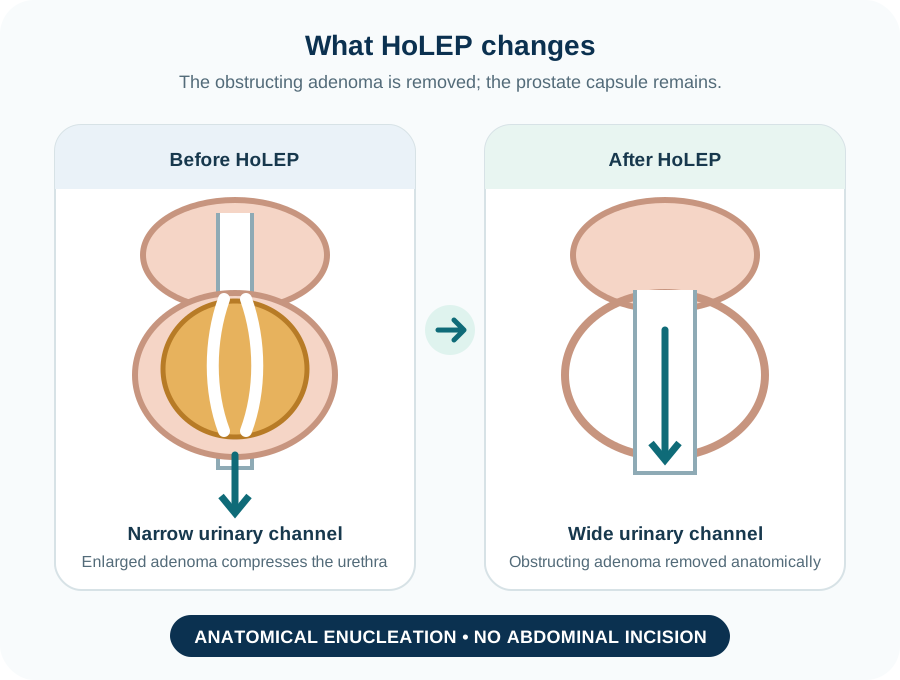
Before and after HoLEP showing relief of urinary obstruction by anatomical removal of the adenoma
Step 1 — decide whether surgery is needed

Who needs prostate surgery?

An enlarged prostate on ultrasound does not by itself mean that you need an operation. The decision is based on how much the obstruction affects you, whether complications have developed, and whether simpler treatment has worked.

1

Symptoms despite treatment

Weak stream, straining, incomplete emptying, frequency, urgency or troublesome night-time urination may justify surgery when symptoms remain significantly bothersome despite appropriate medicines, or when medicines are unsuitable or not tolerated.
2

Urinary retention

Inability to pass urine, repeated episodes of retention, failure of a catheter-removal trial, or continuing catheter dependence are important reasons to consider relieving the obstruction.

3

Complications of obstruction

Recurrent urinary infections, bladder stones, recurrent visible bleeding attributed to BPH, or changes in the bladder caused by longstanding obstruction can shift the balance toward surgery.

4

Kidney consequences

Back-pressure on the kidneys, hydronephrosis or renal impairment related to bladder-outlet obstruction require careful assessment and may make definitive treatment more important.

5

Patient preference

Some men prefer a durable procedural solution rather than long-term medication. The expected benefits must be weighed against recovery, ejaculation changes and other procedure-specific risks.

6

Not every urinary symptom is prostate obstruction

Urgency, frequency and poor flow can also arise from bladder dysfunction, infection, urethral narrowing or other conditions. Establishing the cause before surgery matters.

Key message: We operate on the patient and the obstruction — not on an ultrasound number. A 100 cc prostate with little bother may not need surgery, while a smaller prostate causing retention or complications may.
Step 2 — evaluate before choosing an operation

What evaluation should be done before prostate surgery?

The purpose is to confirm the diagnosis, understand the degree and consequences of obstruction, assess prostate anatomy, and identify factors that influence the safest and most effective procedure.

1

History & symptom assessment

Lower urinary tract symptoms, duration, bother, previous retention, infections, bleeding, medicines, prior urinary surgery, neurological disease and relevant medical conditions are reviewed. A validated symptom score such as IPSS can help quantify symptoms and quality-of-life impact.

2

Examination

Focused physical examination and digital rectal examination when appropriate help assess the prostate and look for findings that may change the diagnostic pathway.

3

Urine & blood tests

Urinalysis is commonly performed; urine culture is added when infection is suspected or according to the operative pathway. Renal function is checked when clinically indicated. PSA is considered when prostate-cancer assessment would influence management.

4

Ultrasound: more than prostate size

Ultrasound can assess prostate volume, post-void residual urine, bladder changes and the upper urinary tract when indicated. Anatomy such as a prominent median lobe or intravesical protrusion may influence treatment planning.

5

Uroflowmetry

Maximum flow rate and the shape and volume of the urinary-flow curve provide objective information about voiding. Results are interpreted together with symptoms and residual urine rather than in isolation.

6

Selective additional tests

Cystoscopy may be useful when urethral or bladder anatomy needs direct assessment. Urodynamics is reserved for selected men when the cause of symptoms or bladder contractility is uncertain. Further imaging is used when clinically indicated.

The decision pathway

From urinary symptoms to the right treatment

01

Understand the problem

Symptoms, IPSS, history, examination and complications.

02

Measure objectively

Urine/blood tests, ultrasound with prostate volume and residual urine, and uroflowmetry as appropriate.

03

Clarify uncertainty

Selective cystoscopy, urodynamics or additional imaging when the diagnosis or anatomy is unclear.

04

Choose treatment

Observation, medication or surgery — and if surgery is appropriate, select the procedure according to anatomy, priorities and clinical factors.

Before HoLEP: the important question is not “Can HoLEP be done?” but “Does this patient need an operation, and is HoLEP the best operation for him?”
How HoLEP is performed

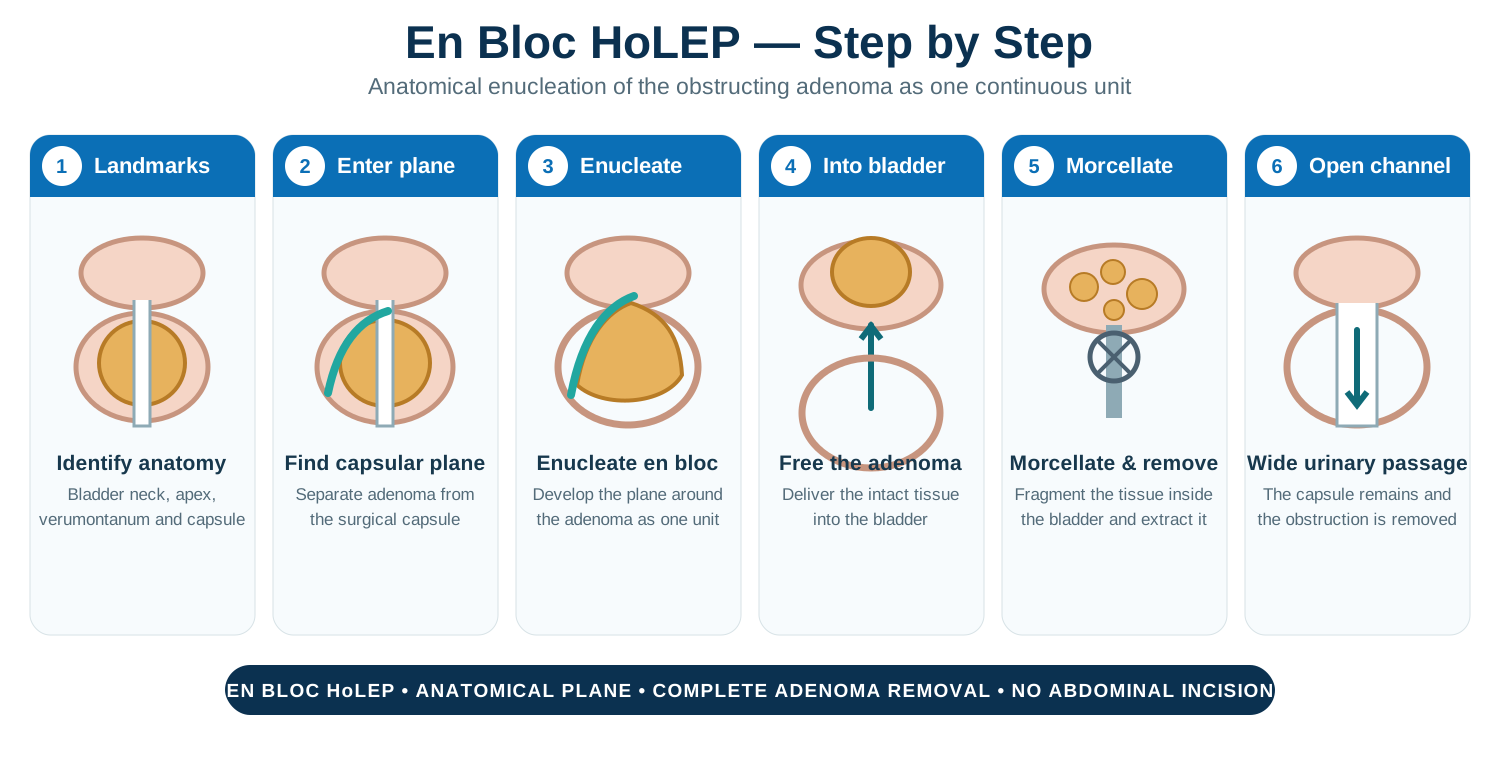
En bloc HoLEP — anatomical enucleation in one piece

There are several recognised HoLEP techniques. In my practice I generally use an en bloc technique: the obstructing adenoma is progressively separated from the surgical capsule as one continuous unit, delivered into the bladder and then morcellated. The principle is anatomical enucleation rather than simply vaporising tissue.

En bloc HoLEP step-by-step infographic showing anatomical landmarks, circumferential mucosal incision, development of the enucleation plane, en bloc adenoma removal, delivery into the bladder, morcellation and a final open urinary channel
1

Identify landmarks & enter the plane

The operation begins by recognising the ureteric orifices, verumontanum, bladder neck, prostate apex and capsule, then entering the natural plane between adenoma and surgical capsule.

2

Enucleate circumferentially

The plane is developed around the adenoma so the obstructing tissue remains together as a single en bloc unit. This is where anatomical orientation and surgical control are particularly important.

3

Morcellate & leave an open channel

The freed adenoma is placed in the bladder, morcellated and removed for histopathology. The surgical capsule remains and the urinary passage is left widely open.

Why this graphic matters: HoLEP is not “laser burning.” It is an anatomical operation. The laser helps the surgeon develop and maintain the correct plane; the result depends on recognising anatomy and completing the enucleation safely.
The most important point about HoLEP

The laser is a tool. The surgeon's skill makes the difference.

HoLEP is an excellent operation for benign prostatic obstruction, but it is technically demanding to learn. The surgeon must understand the three-dimensional anatomy of the prostate, consistently identify the correct capsular plane, control bleeding, protect the urinary sphincter and safely complete morcellation.

Modern laser systems can improve cutting, haemostasis and efficiency, but buying a powerful laser does not by itself create a HoLEP programme. The quality of enucleation depends heavily on the person using it.

A message for patients: When choosing where to have HoLEP, do not ask only, “Which laser do you use?” Also ask, “How experienced is the surgeon with HoLEP?”
Technology + technique

What expertise changes

  • Finding and staying in the correct anatomical plane
  • Efficient enucleation rather than indiscriminate tissue vaporisation
  • Haemostasis and visibility throughout the operation
  • Respecting the sphincter and continence mechanism
  • Handling very large or difficult prostate anatomy
  • Safe morcellation and management of unexpected problems
Why there is a learning curve

HoLEP is not simply “laser prostate surgery.”

Unlike techniques that primarily resect or vaporise tissue, HoLEP requires anatomical enucleation along the prostate capsule. That skill takes structured training, mentorship and case experience to develop. The European Association of Urology notes that surgeon experience is the most important factor affecting the overall occurrence of complications in HoLEP and recommends mentorship to improve the learning curve.

The principle

Good technology helps a skilled surgeon.

It does not replace one.

Technique matters

Sphincter-preserving HoLEP

HoLEP removes the obstructing adenoma, but continence depends on protecting the urinary sphincter at the apex of the prostate. This is one of the parts of the operation where anatomical understanding and surgical judgement matter most.

Sphincter-Preserving HoLEPThe key anatomical challenge is at the prostate apex, immediately next to the external urinary sphincter. 1. Normal anatomyExternal sphincter sits just belowthe apical prostate and urethra. 2. Careful apical releaseStay in planePreserve sphincter &supporting mucosa 3. After enucleationWide urinarychannelExternal urinarysphincter preservedThe laser provides energy. Anatomical recognition, controlled dissection and sphincter protection come from surgical skill

Removing obstruction while respecting the continence mechanism

The external urinary sphincter lies immediately beyond the apex of the prostate. During apical enucleation, the surgeon must recognise where the adenoma ends, where the sphincter begins, and how the urethral mucosa and supporting tissue should be released.

  • Identify the correct capsular plane early and remain within it.
  • Define the apical anatomy before excessive traction is applied.
  • Preserve appropriate urethral mucosa and supporting tissue near the sphincter.
  • Avoid unnecessary deep, thermal or mechanical injury in the sphincteric region.
  • Tailor the dissection to the patient's anatomy rather than treating every prostate identically.
The laser cannot identify the sphincter. The surgeon has to. Technology provides energy; anatomical recognition and controlled dissection come from training and experience.
What patients should understand

“Sphincter-preserving” does not mean zero leakage

It is best understood as a refinement and philosophy of anatomical HoLEP — not a separate operation and not a guarantee of immediate continence.

  • Temporary leakage can still occur after surgery.
  • Early continence also depends on age, prostate anatomy, bladder function and pre-existing sphincter function.
  • Pelvic-floor rehabilitation may help recovery.
  • Persistent significant incontinence is uncommon but remains a recognised risk.
1

Know the apex

Understand the relationship between adenoma, capsule, apical urethra and external sphincter before completing the apical release.

2

Preserve what matters

The goal is complete relief of obstruction without sacrificing tissue that contributes to the continence mechanism.

3

Experience matters

Recognising subtle anatomical planes and adapting the dissection to difficult anatomy are learned surgical skills, not functions of laser wattage or brand.

Prostate size and treatment choice

HoLEP can be considered across a broad range of prostate sizes

These circles are a simple visual scale, not a diagnostic measurement. Actual treatment decisions require ultrasound or MRI measurements plus clinical assessment.

≈30 ccsmall gland
≈50 ccmoderate
≈80 cclarge
≈120 ccvery large
≈200 cc+massive gland
Three different approaches

HoLEP, UroLift and Rezūm solve the same problem in very different ways

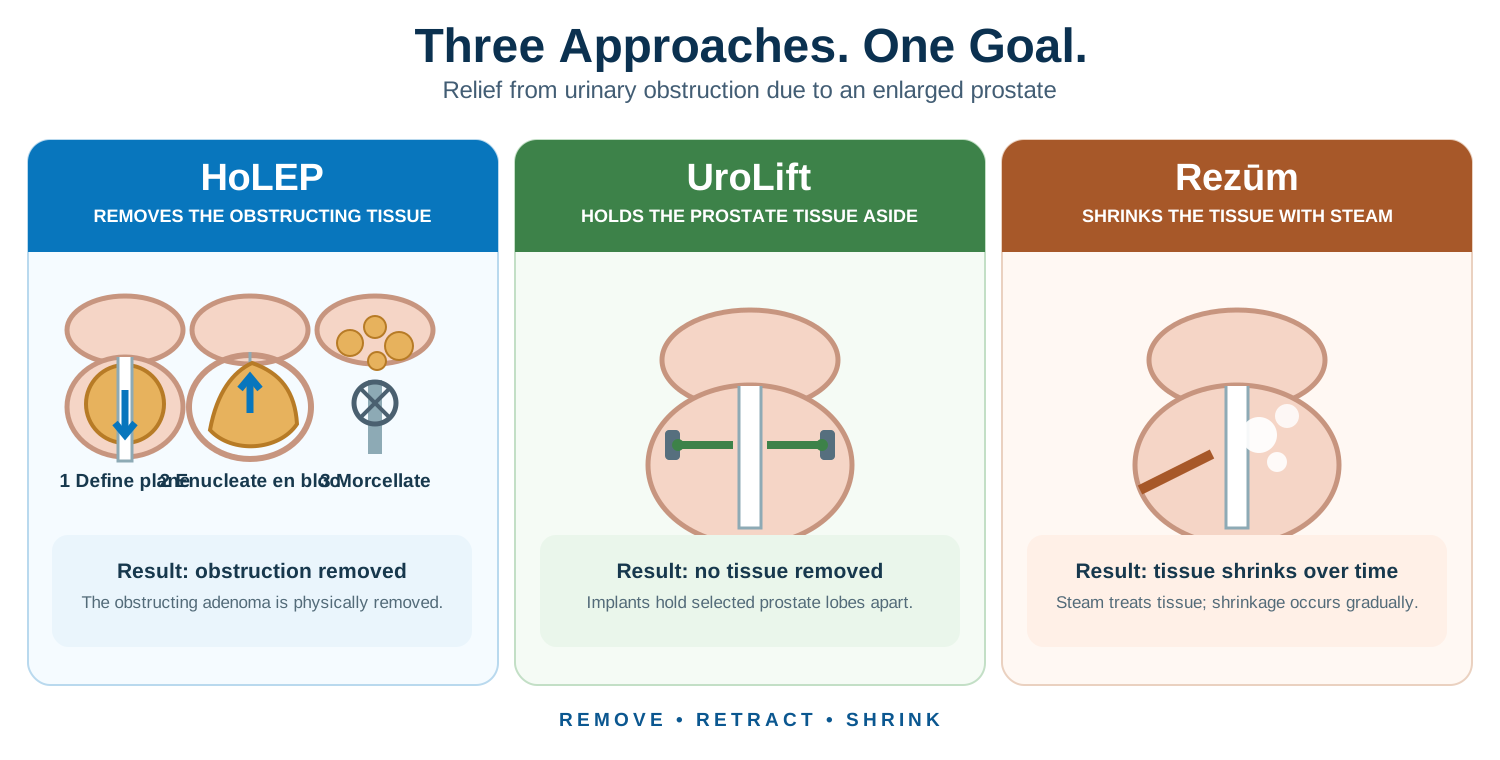
For patients, the easiest way to understand the difference is to ask what physically happens to the obstructing prostate tissue.

Visual comparison showing HoLEP removes obstructing prostate tissue, UroLift retracts tissue with implants, and Rezum shrinks tissue with steam
The central difference: HoLEP removes the obstructing adenoma; UroLift mechanically retracts tissue; Rezūm treats tissue so it shrinks later. Which philosophy fits best depends on prostate anatomy, symptom severity, durability expectations and how important ejaculation preservation is to the patient.

Then compare the trade-offs

A procedure that is less invasive on day one may involve less tissue removal and a greater chance of needing additional treatment later. A more complete operation may trade faster, more durable relief for changes such as loss of forward ejaculation.

FeatureHoLEPRobotic Simple ProstatectomyTURPUroLiftRezūm
Prostate size rangeBroad / size-independentUsually large / very large glandsUsually small–mediumSelected anatomySelected small–medium
How it worksEndoscopic enucleation through urethraEnucleation through abdominal/robotic accessResects tissue chipsRetracts tissue with implantsSteam causes tissue shrinkage
Tissue for pathologyYesYesYesNoNo
Symptom reliefUsually rapidUsually rapidUsually rapidUsually rapidGradual
Retreatment riskLowLowHigher over timeHigherHigher
Ejaculation preservationUsually not preservedUsually not preservedUsually not preservedOften preservedOften preserved
Not every patient should have HoLEP. UroLift or Rezūm may be attractive to selected men who prioritise preservation of ejaculation and accept the possibility of less complete tissue removal or future retreatment. HoLEP becomes particularly compelling when the priority is substantial anatomical relief and long-term durability, especially in larger glands.
Large prostates: an important comparison

HoLEP vs robotic simple prostatectomy

Robotic simple prostatectomy is an effective operation and is increasingly promoted for very large prostates. But “robotic” does not automatically mean less invasive or better. Both operations remove the obstructing adenoma; the major difference is how the surgeon reaches it.

HoLEP versus robotic simple prostatectomy Both operations remove the obstructing adenoma. HoLEP reaches it through the urethra without abdominal incisions. Robotic simple prostatectomy reaches it through abdominal robotic ports. Two Advanced Options for Large Benign Prostate Enlargement Same goal: remove the obstructing adenoma. Different routes to reach it. HoLEP TRANSURETHRAL ENUCLEATION • NO ABDOMINAL INCISIONS Robotic Simple Prostatectomy ROBOTIC ABDOMINAL ACCESS • ADENOMA ENUCLEATION 1 Define plane 2 Enucleate en bloc 3 Morcellate & remove Result: obstruction removed through the urethra The prostate capsule remains; no abdominal access is required. 1 Robotic access 2 Remove adenoma 3 Reconstruct / close Result: obstruction removed through abdominal robotic access The adenoma is removed and the operative opening is reconstructed. SAME GOAL • DIFFERENT ROUTE • DIFFERENT RECOVERY PROFILE
The simplest way to understand the difference: both operations can remove the obstructing adenoma. HoLEP reaches it through the urethra without abdominal incisions; robotic simple prostatectomy reaches it through abdominal robotic ports. The outcome goal is similar, but the route and peri-operative burden are different.
QuestionHoLEPRobotic Simple Prostatectomy
How is the prostate reached?Through the urethra — no abdominal incisionThrough abdominal robotic ports and surgical access to the prostate/bladder
Can it treat a very large prostate?Yes — size-independent when appropriate expertise is availableYes — commonly used for large and very large glands
What tissue is removed?Obstructing adenoma is anatomically enucleatedObstructing adenoma is surgically enucleated
Symptom and flow improvementExcellentExcellent; comparative studies show broadly similar functional improvement
Catheter & hospital stayGenerally shorterGenerally longer in comparative evidence
Blood loss / transfusionGenerally lower with laser enucleationGreater than laser enucleation in pooled comparative evidence
Abdominal woundsNoneRobotic port incisions are required
Pathology specimenYesYes
Most important limitationTechnically demanding; outcomes depend strongly on surgeon experienceMore invasive access and use of robotic/abdominal surgery
Our perspective: For a man whose main problem is benign prostatic obstruction — even with a very large gland — an experienced HoLEP surgeon can usually achieve the same goal of adenoma removal without abdominal access. Current comparative evidence supports similar functional outcomes, while laser enucleation generally has advantages in catheterisation, hospital stay, blood loss and transfusion. Robotic simple prostatectomy remains a valid operation and may be appropriate in selected situations; the choice should be based on the patient, anatomy, associated pathology and genuine expertise rather than the word “robotic.”

Why surgeon experience matters: HoLEP has a meaningful learning curve. The EAU guideline specifically notes surgeon experience as an important determinant of HoLEP complications. Therefore the fairest comparison is experienced HoLEP versus experienced robotic surgery — not a procedure performed early in a learning curve.

Questions men often hesitate to ask

Urinary control, ejaculation and sexual function after HoLEP

These issues deserve a clear discussion before surgery. Urinary leakage is usually temporary, while the change in ejaculation is commonly long-lasting. They are different problems and should not be confused.

Will I become incontinent?

Temporary leakage can occur after HoLEP. After removal of the obstruction, the bladder and urinary sphincter have to adapt to a very different outlet. Some men notice leakage with coughing, standing, lifting or urgency, particularly during the early recovery period.

  • For most men who experience leakage, urinary control improves progressively during recovery.
  • Pelvic-floor exercises are commonly used to support recovery of continence.
  • Risk and speed of recovery vary with age, prostate size, baseline bladder function, pre-existing continence and surgical factors.
  • Persistent significant stress urinary incontinence is uncommon, but it is an important recognised complication and should be discussed before surgery.
Sphincter preservation matters. Careful technique around the external urinary sphincter is intended to minimise trauma to the continence mechanism, although no technique can guarantee immediate or perfect continence in every patient.

What happens to ejaculation?

Most men should expect little or no semen to come out during orgasm after HoLEP. This is often called dry or retrograde ejaculation. The operation changes the bladder-neck/prostatic channel so semen no longer exits in the usual way.

  • Orgasm can still occur even when no semen is seen.
  • Erection and ejaculation are different functions; loss of forward ejaculation does not mean loss of erections.
  • The ejaculatory change is usually permanent and is especially important for men who wish to preserve fertility.
  • Men for whom preservation of ejaculation is a high priority should discuss this before choosing a procedure, because alternative treatments may offer a greater chance of preserving ejaculation in appropriately selected patients.
Ask before surgery: “How important is ejaculation to me compared with maximum removal of obstruction and long-term durability?” That preference can influence the choice of treatment.

Urinary continence

Usually: preserved, with possible temporary leakage during recovery.
Key concern: persistent significant leakage is uncommon but possible.

Ejaculation

Usually: markedly reduced or absent forward ejaculation after HoLEP.
Key concern: generally a lasting change and relevant to fertility.

Erections & orgasm

Usually: erectile function is preserved and orgasm remains possible.
Key point: erections, orgasm and semen emission are separate aspects of sexual function.

After HoLEP

What recovery commonly looks like

Individual recovery varies; your own surgeon's advice takes priority.

FIRST 24 HOURS

Catheter & observation

Urine may be blood-stained. Catheter removal depends on drainage and clinical recovery.

WEEK 1

Flow improves

Frequency, urgency and mild burning are common while the bladder settles.

WEEKS 2–4

Steady recovery

Activity gradually increases. Temporary leakage can improve with pelvic-floor exercises.

WEEKS 6–12

New baseline

Urgency and continence generally continue to improve and follow-up assesses the result.

Important questions

Benefits, trade-offs and common concerns

What are the main advantages of HoLEP?

It can remove a large amount of obstructing adenoma through the urethra, can be used for very large glands, provides tissue for pathology and is associated with a low long-term retreatment rate.

What are the important trade-offs?

Temporary burning, urgency, bleeding or leakage can occur. Retrograde or dry ejaculation is expected in most men. Less common complications include infection, urethral narrowing, bladder-neck contracture, persistent incontinence and need for another procedure.

Does HoLEP affect erections?

Erectile function is generally preserved, but ejaculation usually changes. Fertility implications should be discussed before surgery.

What is sphincter-preserving HoLEP?

It describes technique refinements intended to minimise trauma near the external urinary sphincter and support earlier continence recovery. Results still depend on anatomy, bladder function and surgical factors.

Can a very large prostate be treated with HoLEP?

HoLEP is considered a size-independent endoscopic option and may be suitable for very large prostates when clinically appropriate and performed by an experienced team.

Patient resources

Articles and videos — coming next

We are building a focused library of practical HoLEP education for patients and families. The aim is not generic content, but clear answers to the questions people actually ask before prostate surgery.

ARTICLE SERIES

Understand whether surgery is needed

Symptoms, retention, prostate size, bladder function, PSA, medicines and the tests that matter before deciding on surgery.

VIDEO SERIES

HoLEP explained visually

Short videos on en-bloc HoLEP, sphincter preservation, continence, ejaculation, recovery and treatment of very large prostates.

COMPARISONS

Choosing between procedures

HoLEP vs TURP, robotic simple prostatectomy, UroLift and Rezūm — with emphasis on anatomy, durability, recovery and surgeon experience.

Explore patient resources
Dr Rajiv Goel, urologist
Consultant urologist

Dr Rajiv Goel

MS (AIIMS) · MCh (AIIMS)

Urologist with focused experience in laser prostate surgery, kidney-stone treatment and endourology. Consultations at Kidney, Prostate and Stone Clinic, Gurugram.

Procedural experience: more than 300 HoLEP procedures and more than 1,500 RIRS (Retrograde Intrarenal Surgery) procedures for kidney stones.

This website is designed to help patients and families understand the procedure before making a treatment decision.

Read more about Dr Rajiv Goel

Appointments & second opinions+91 93110 98987

Kidney, Prostate and Stone Clinic
554, Sector 39, near Bakhtawar Chowk, Gurugram

Websites:
www.rajivgoelurologist.com
www.indiamedhealth.com

Call now
Call +91 93110 98987